AP Chemistry · Unit 6 · Topic 6.8
Enthalpy of Formation
Energy conservation and state functions connect temperature data, phase changes, bonds, and reaction enthalpy.
1. Topic Lens
Enthalpy of Formation is studied through thermochemistry. Connect the system boundary, interacting parts, and measurable evidence before applying a formula.
2. Why the Formula Works
The relationship is built from definitions and conservation reasoning:
- Define system and surroundings before assigning signs.
- For a material with nearly constant specific heat, sensible heat is mcΔT.
- Energy conservation makes heat lost by one part equal heat gained by the other in an insulated model.
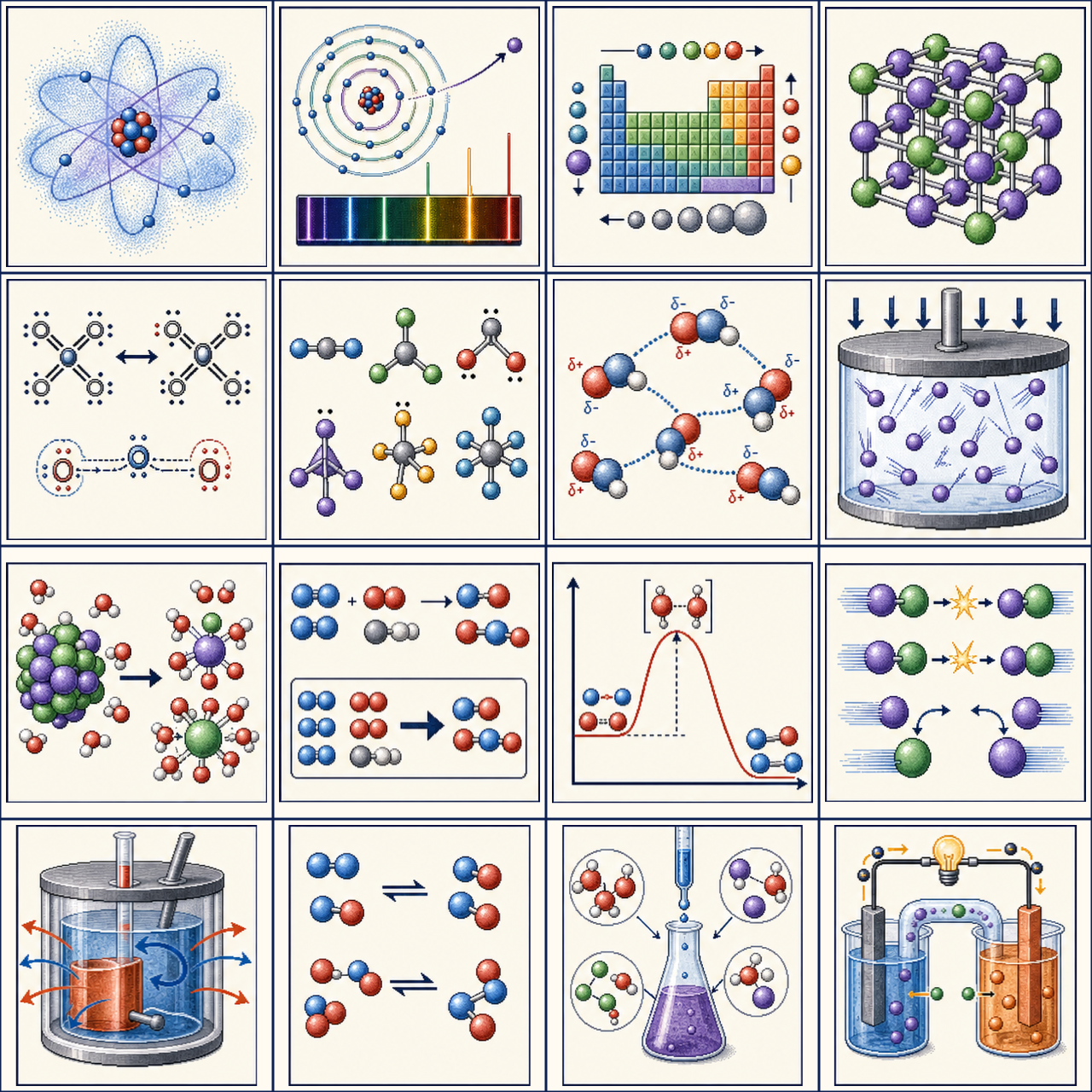
3. Detailed Visual Model
4. Worked Example and Lab Link
A 100.0 g water sample warms by 5.0°C. Using c=4.18 J·g⁻¹·°C⁻¹, find q for the water.
Answer: q=(100.0)(4.18)(5.0)=2.09 kJ absorbed.
Investigation idea: Calibrate a coffee-cup calorimeter, then measure an original neutralization and propagate uncertainty.
Common trap: Temperature is not heat, and the sign of q depends on whether the named object is system or surroundings.
Explain how enthalpy of formation supports or limits this conclusion: q=(100.0)(4.18)(5.0)=2.09 kJ absorbed.
Official curriculum reference: College Board AP Chemistry course page. The explanation and worked example are independently written for this study site.